From Shenzhen Drones to DIY Chips: What I Learned This Month Across China, Japan, and the Maker CommunityJune has been one of those months where seemingly unrelated topics — drones, routers, open-source chips, robotics, and hardware hacking — started connecting into a much larger story.
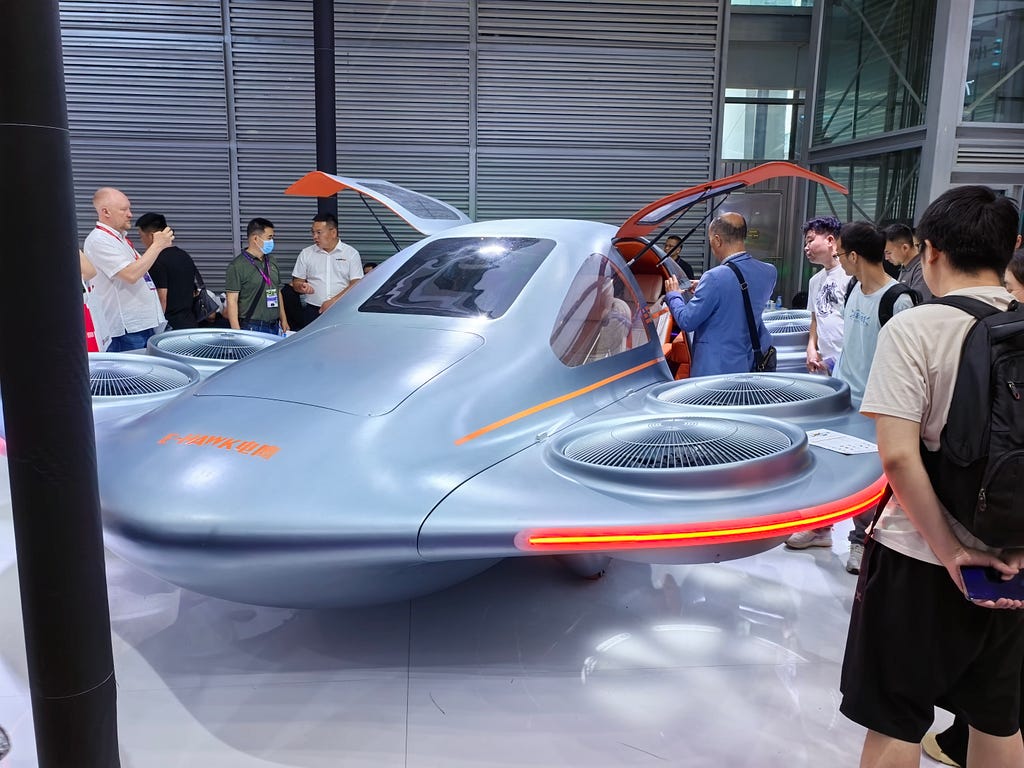
Over the past few weeks, I moved between Shenzhen, Osaka, Tokyo, and soon Kanazawa, watching how engineers, makers, startups, and communities are building technology from the ground up.
The common thread isn’t AI, robotics, or semiconductors.
It’s something simpler:
More people are becoming creators instead of consumers.https://medium.com/media/0541cfa91d3db144665439bde9a2932c/hrefThe Drone Industry Is Entering a New PhaseEarlier this month, I attended a major drone competition in Shenzhen.
What struck me wasn’t the aircraft themselves. It was the number of teams and countries trying to build their own drone ecosystems.
For years, the global drone industry largely meant buying products from DJI. Today, governments, universities, startups, and industrial users increasingly want something different:
They want drones designed for their own missions, regulations, and supply chains.
Whether the application is agriculture, logistics, infrastructure inspection, emergency response, or defense, there is growing demand for local ownership of technology.
At the Shenzhen event, it became clear that China is no longer just producing drones. It is producing the entire ecosystem around them:MotorsFlight controllersCommunication modulesCamerasAI processorsManufacturing infrastructureThis ecosystem advantage may ultimately be more important than any individual product.Drone Delivery Is Becoming Boring — And That’s ImportantOne of the most interesting developments in Shenzhen is that drone delivery is becoming normal.
Meituan recently updated its drone delivery system so that ordering and pickup can be completed through the same station, making the service significantly easier for ordinary users.
When a technology stops feeling futuristic and starts feeling routine, that’s often when it becomes truly successful.
The most exciting thing about drone delivery in China today isn’t the technology itself.
It’s the fact that people casually use it.
The future arrives quietly.Communities Can Become CompaniesAnother highlight this month is seeing members of the Nico-Tech Shenzhen community continue to build real businesses.
At Interop Tokyo 2026, I will be joining ZUNDA Inc., a company founded by Shao1555, a long-time community member.
ZUNDA develops managed networking solutions and demonstrates something I increasingly see across Asia:
Communities are becoming launchpads for companies.
People meet through open-source projects, maker events, technical discussions, and hobby communities. Years later, some of those same people are building products, raising funding, and exhibiting at major industry events.
The line between hobbyist and entrepreneur is becoming much thinner.NT Kanazawa: Where Makers Meet the FutureThe event I’m most excited about this month is NT Kanazawa 2026.
For readers outside Japan, NT (“Nico-Tech”) is one of the country’s largest maker gatherings. It brings together robotics builders, hardware hackers, software developers, artists, researchers, and engineers who simply enjoy creating things.
This year’s event features something particularly special.
Hardware hacker and open-source advocate Bunnie Huang will be joining us in Japan.
Many people know Bunnie from his books Hacking the Xbox and The Hardware Hacker. But his recent work may be even more important.
He has become one of the leading voices advocating for transparency in hardware manufacturing, open-source hardware, and accessible semiconductor development.
His presentation will focus on:
Baochip-1x: An Almost-Open 22nm SoC for High-Reliability Applications
The title may sound technical, but the implications are much broader.
For decades, designing and manufacturing a semiconductor was something only large corporations could realistically do.
Today, thanks to RISC-V and open-source tooling, small teams can increasingly design their own processors.
Manufacturing remains difficult, expensive, and politically complicated — but projects like Baochip-1x show that the barriers are slowly falling.
The democratization of software happened years ago.
The democratization of hardware is still underway.
The democratization of semiconductors may be next.Why This MattersLooking across these topics — drones, routers, robotics, open-source chips, maker events — they might seem unrelated.
But I think they’re all part of the same trend.
Technology is becoming more accessible.
The tools required to build meaningful products are reaching smaller teams, independent engineers, and local communities.
China’s manufacturing ecosystem accelerates this process.
Open-source software accelerates it.
Communities accelerate it.
And events like NT Kanazawa provide places where these ideas can spread.Looking AheadAfter NT Kanazawa, I’ll be heading to Portland for Teardown 2026, where I’ll give the opening talk about Shenzhen’s hardware ecosystem, teardown culture, charging technologies, chip analysis communities, and the supply chains that support them.
That will be next month’s story.
For now, I’m looking forward to seeing makers, engineers, researchers, and hardware enthusiasts in Kanazawa.
If you’re attending NT Kanazawa, stop by and say hello.
The future is rarely built by giant organizations alone.
More often, it starts with small groups of people who decide to make something themselves.
https://takasumasakazu.gumroad.com/l/2026sz