Small products often explain Shenzhen better than big slogans.A short USB-C to USB-C cable can be surprisingly useful.
The type I looked at is a small strap-style cable. You can attach it to a phone, a bag, or a small device, and use it when you need to charge something outside. It is not a special product. You may find something similar in a 100-yen shop in Japan, or on Chinese e-commerce platforms for around 200 yen.
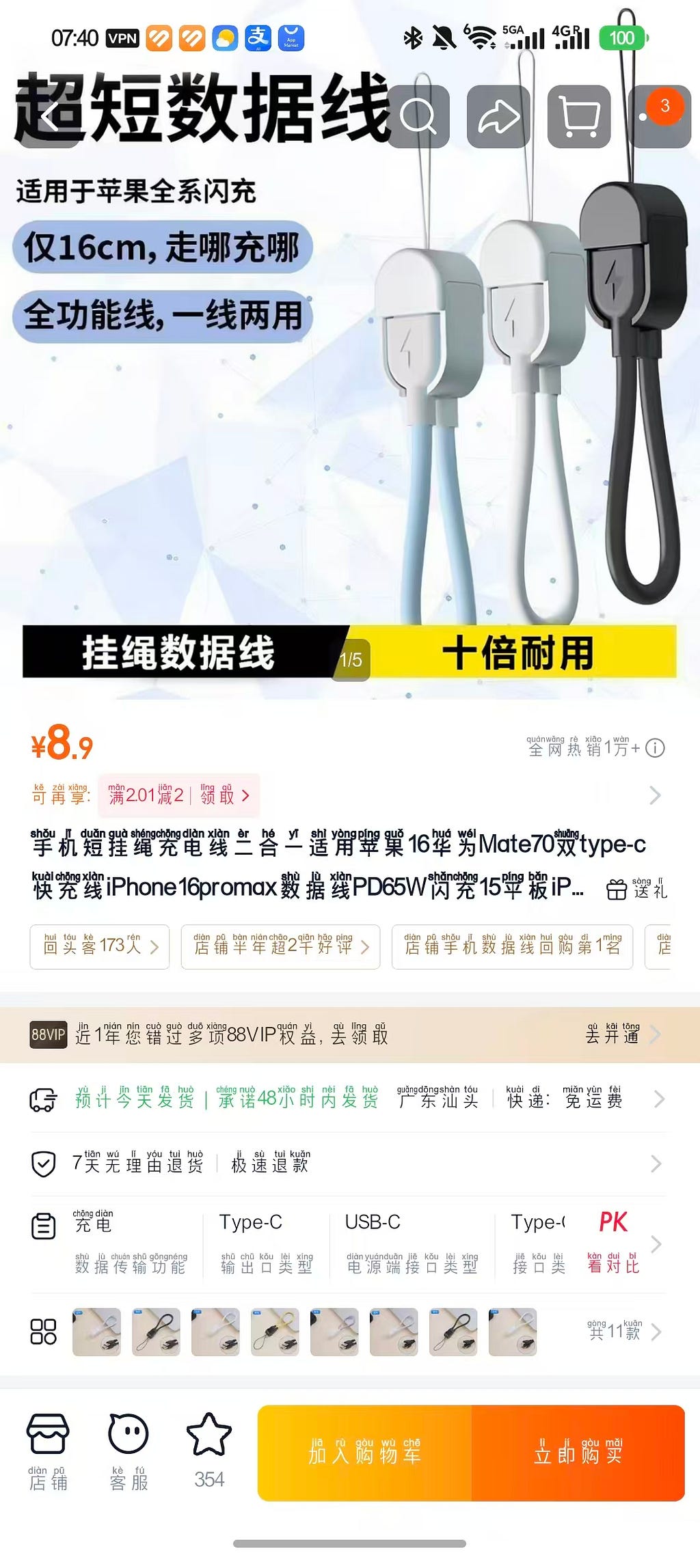
At first glance, they all look almost the same.
In many cases, they may actually be the same product sold by different shops. That is very common in China’s e-commerce ecosystem.
But when you buy this kind of product from Shenzhen, and when you follow the price upstream, the story becomes more interesting.From 200 yen to 1.5 RMBFor a product sold to consumers for around 200 yen, the product itself is only one part of the final price.
The price includes retail margin, platform fees, packaging, logistics, and the cost of getting the product in front of consumers.
If you go to Huaqiangbei, Shenzhen’s electronics market district, you may find a similar cable for around 5 RMB.
If you go further upstream, to 1688, Alibaba Group’s domestic B2B and wholesale-oriented marketplace, the same category of product appears for around 1.5 RMB.
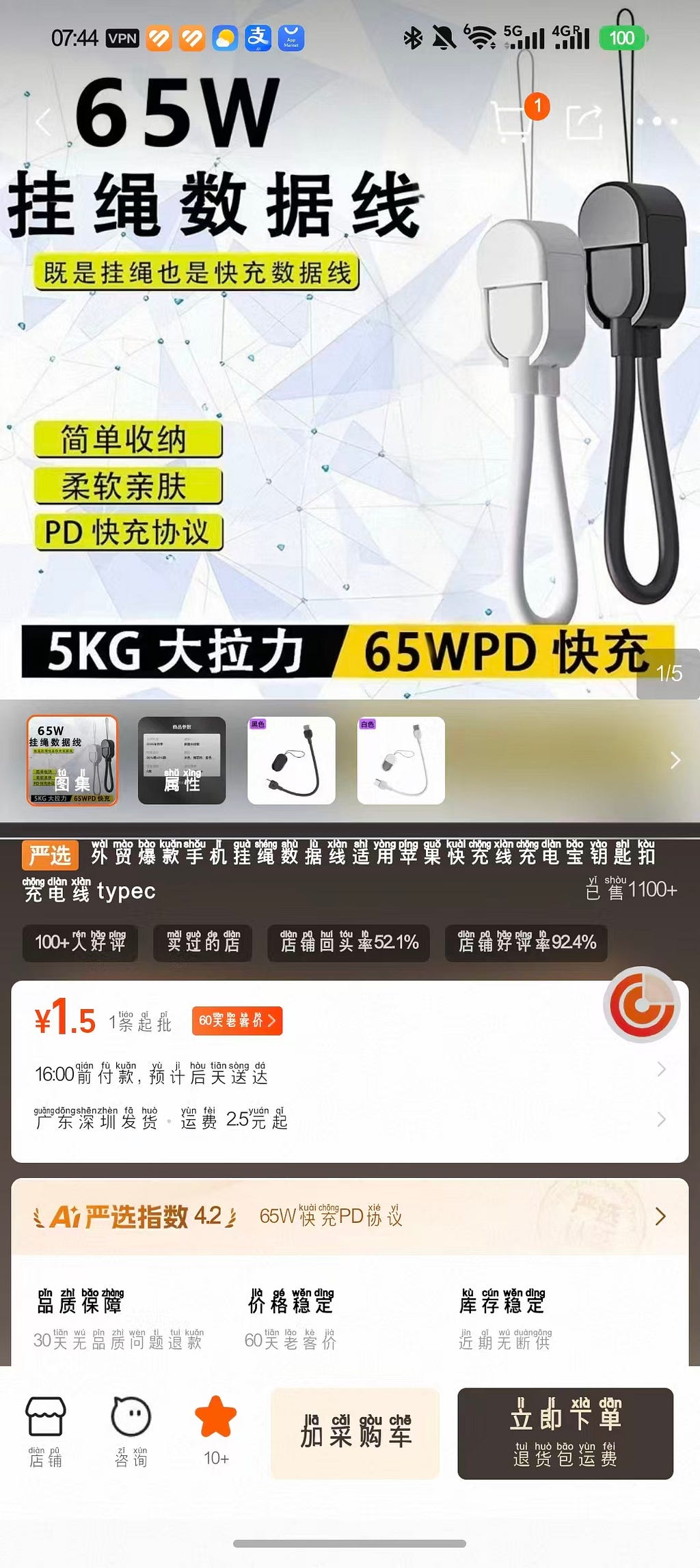
That is about 35 yen, depending on the exchange rate.
Of course, this does not mean that you can simply buy everything at the factory price.
Shipping is separate. Packaging may not be included. The seller may not be the factory. If you buy only a few samples, the total cost is not just “1.5 RMB times the number of pieces.”
Still, the price difference is a useful starting point.
It shows that even a very small and cheap product contains many layers of work: manufacturing, wholesale, packaging, domestic logistics, international logistics, retail, and customer support.Before buying 500 pieces, I ordered samplesA friend in Japan wanted about 500 pieces of this cable.
I did not immediately place a bulk order.
Instead, I ordered samples from several different sellers.
The products in the listing photos looked almost identical. The prices were also very close: around 1.34 to 1.5 RMB per piece. The difference was only a few Japanese yen.
When the samples arrived, I had to write the seller names on the bags. Otherwise, I would have mixed them up immediately.
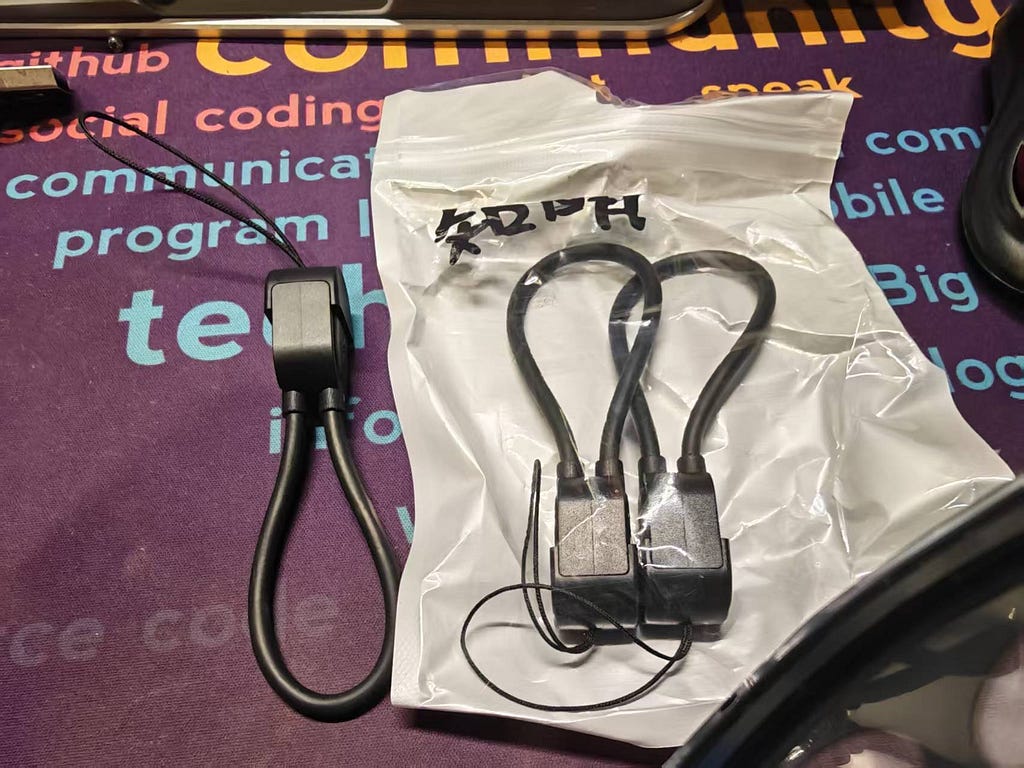
In photos, the differences are almost impossible to see.
But when I looked closely at the physical samples, small differences appeared.
The position of the injection molding pin marks was different. The connector housing was molded slightly differently. The strap material felt different. The tiny details around the connector were not exactly the same.
That means these were probably not just the same product being resold by different shops.
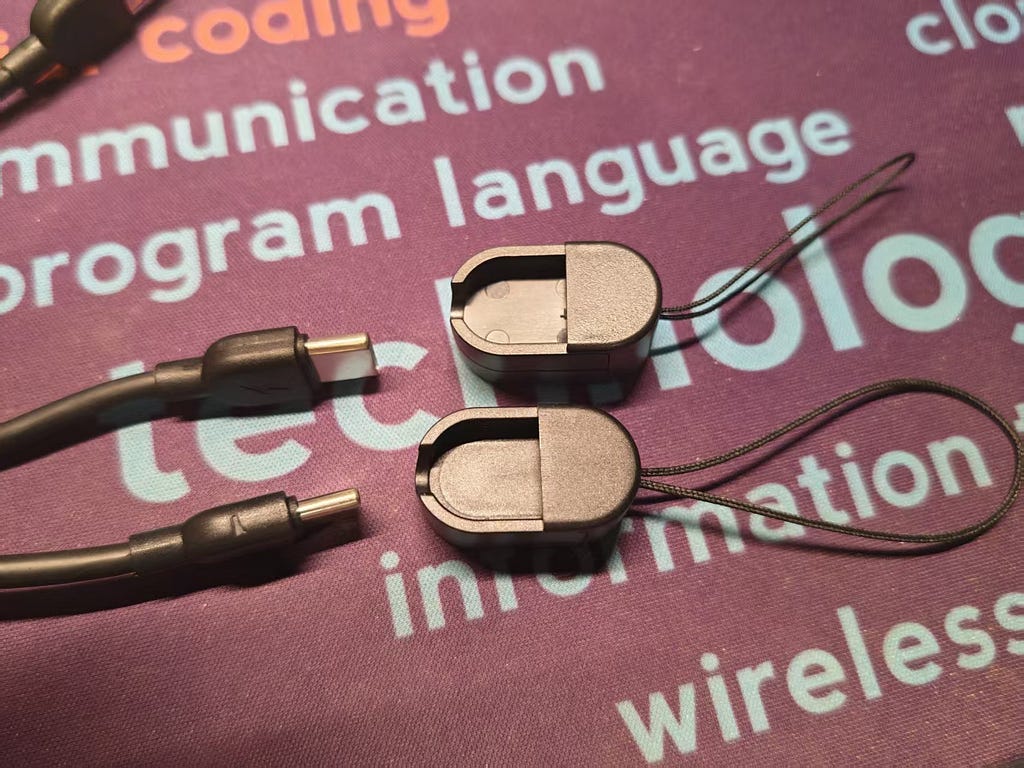
They were similar products, made through different manufacturing processes.Even a 1.5 RMB product has multiple makersThis is the part I find interesting.
Even for a product that sells for around 1.5 RMB, if there is enough demand and a small price difference, multiple companies enter the market.
Each seller may have a slightly different advantage.
One seller may be able to ship locally faster. Another may already have a customer who wants a batch. Another may have a slightly better-looking strap. Another may be better at responding to small customization requests.
The differentiation does not have to be dramatic.
At this price point, even a tiny difference can become a business.
This is one of the important things to understand about Shenzhen.
The supply chain is not an abstract machine. It is full of people and small companies looking for work, finding opportunities, copying, modifying, improving, and competing in very narrow spaces.
A 1.5 RMB USB-C cable is not a glamorous product.
It is not a humanoid robot. It is not an AI chip. It is not an electric vehicle.
But precisely because it is so ordinary, it shows the depth of Shenzhen’s manufacturing ecosystem.Shenzhen is visible in small productsWhen people talk about Shenzhen, they often focus on the obvious stories: drones, robotics, electric vehicles, semiconductors, AI hardware, and massive electronics markets.
Those are important.
But Shenzhen is also visible in much smaller objects.
A short USB-C cable. A plastic case. A connector. A package. A small PCB. A low-cost accessory that nobody pays attention to.
When you compare those objects carefully, you begin to see how many people, tools, molds, workshops, sellers, logistics networks, and customer relationships are involved.
That is the real lesson.
Shenzhen is not just a place where cheap things are made.
It is a place where many people can quickly make similar things, slightly different things, cheaper things, faster things, and customized things — even at the scale of a 35-cent cable.A practical noteIf you buy small products from 1688 or similar platforms, price alone is not enough.
For low-cost items, the difference between 1.34 RMB and 1.5 RMB may matter less than the seller’s response speed, packaging, ability to understand your request, shipping cost, and whether the sample matches what you actually need.
Sometimes the product photo shows a plastic bag, but the price does not include that bag.
Sometimes the listing photo and the delivered product are not exactly the same.
Sometimes two photos look different, but the physical products are almost identical.
That is why sample ordering matters.
For small items, the cheapest supplier is not always the cheapest option in practice.If you want to understand Shenzhen from the ground levelI write field notes like this because Shenzhen is best understood by walking, buying, comparing, and asking simple questions about ordinary products.
Not every important lesson comes from a factory tour or a conference stage.
Sometimes it comes from a 35-cent USB-C cable.
I recently published an English guide for people visiting Shenzhen for the first time — especially makers, engineers, researchers, startup people, and business visitors who want to explore the city by themselves.
The guide covers public transportation, mobile payments, maps, Huaqiangbei, open-access places, and practical ways to move around Shenzhen without relying only on arranged tours.
If you want to understand Shenzhen from the ground level, you can find the guide here:
Exploring Shenzhen 2026 - A Field Guide to China’s Hardware Ecosystem
A small object is sometimes enough to open the door to a much larger supply chain.